
"coffee nursery"
800 article(s) found

Description method of planting Flavor and taste of Bourbon Pacas Coffee
Pacas (Pacas) is a natural variant of bourbon, similar to Kaddura of Brazil (Cuturrra) and Villa Sacrhi of Costa Rica. Like other bourbon variants that have been widely planted, Pacas is a new variety formed by a single gene mutation, which gives Pacas a crucial characteristic: the plant can be further closely planted, and eventually the body.
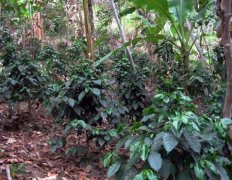
The production of coffee basic knowledge and high-quality coffee beans
Coffee trees take 3-5 years from planting to fruiting. 6-10 years of coffee trees are the most likely to bear fruit, about 15-20 years, is the harvest period. Coffee trees are usually bred in nurseries and grow into saplings, and then moved to coffee farms a year later, in full compliance with the way the Arabs planted and cultivated coffee trees. Coffee trees will continue to take root downward and upward in the first four or five years of their growth.

Description of Flavor and Flavor of Coffee planting Environment introduction to Regional treatment of Coffee Variety
Description of taste and flavor of coffee tree planting environment and characteristics of coffee varieties the regional treatment method introduces that under the condition of good management, coffee begins to bear fruit in the third year after planting. The fertilization of adult coffee fruit trees should be mainly nitrogen and potassium fertilizer, and properly combined with phosphorus fertilizer and other elements. The effect of applying potash fertilizer from July to August is the best. Fruiting trees are generally fertilized 5 times a year, from February to March (flowering) and 4 ~

Coffee beans History the birth of coffee beans
The lifetime of a coffee tree takes 3-5 years from planting to fruiting. 6-10 years of coffee trees are the most likely to bear fruit, about 15-20 years, is the harvest period. Coffee trees are usually bred in nurseries and grow into saplings, and then moved to coffee farms a year later, in full compliance with the way the Arabs planted and cultivated coffee trees. Coffee trees will continue to decline in the first four or five years of growth.
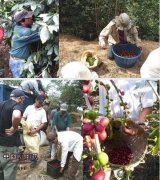
From the planting of coffee trees to the harvest of coffee beans, how to raise coffee trees
Coffee trees take 3-5 years from planting to fruiting. 6-10 years of coffee trees are the most likely to bear fruit, about 15-20 years, is the harvest period. Coffee trees are usually bred in nurseries and grow into saplings, and then moved to coffee farms a year later, in full compliance with the way the Arabs planted and cultivated coffee trees. Coffee trees will continue to take root downward and upward in the first four or five years of their growth.

Yemeni coffee varieties with unique flavor and complete grain shape introduce the flavor of fine coffee beans in Manor.
Yemeni coffee originated from Arabian coffee trees hundreds of years ago, all produced in areas above 3000 feet above sea level. For hundreds of years, the unique planting and production methods of Yemeni coffee have remained almost unchanged. The seedlings of Yemeni coffee trees are first cultivated in nurseries and then transplanted to high elevations. Pesticides and fertilizers are not used in the breeding process. Mature coffee beans are naturally dried on coffee trees and shelled by stone grinding.
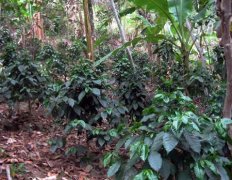
The general knowledge of fine coffee explains the production of coffee beans in detail.
Coffee trees take 3-5 years from planting to fruiting. 6-10 years of coffee trees are the most likely to bear fruit, about 15-20 years, is the harvest period. Coffee trees are usually bred in nurseries and grow into saplings, and then moved to coffee farms a year later, in full compliance with the way the Arabs planted and cultivated coffee trees. Coffee trees will continue to take root downward and upward in the first four or five years of their growth.

How to grow coffee beans out of the harsh conditions where China is suitable for growing coffee only Yunnan
Professional coffee knowledge exchange More coffee bean information Please pay attention to coffee workshop (Weixin Official Accounts cafe_style) Qianjie-coffee planting introduction After removing the exocarp and pulp of coffee fruit, plant the seeds with endocarp in the nursery. After 1 or 2 months, the seeds will germinate slowly, grow main roots and support seedlings. After about 9 months, they will grow into a small tree with 12-16 leaves and about 50cm.

Coffee planting: sowing seeds in coffee estates in Nicaragua
Professional baristas Communication Please follow the Coffee Workshop (official Wechat account cafe_style) when you were young, you visited the nursery. All you know is to plant seeds, irrigate them on time, and have enough sunshine, so that the seedlings will grow. With more scientific knowledge, we also realize the importance of fertilization and disinfestation. People who grow up in cities have little contact with the lives of farmers except for potted plants at home. Because of coffee, the author is organic.

Unique flavor, complete grain shape, taste characteristics of Yemeni coffee varieties, introduction to the flavor of fine coffee beans in the manor.
Yemeni coffee originated from Arabian coffee trees hundreds of years ago, all produced in areas above 3000 feet above sea level. For hundreds of years, the unique planting and production methods of Yemeni coffee have remained almost unchanged. The seedlings of Yemeni coffee trees are first cultivated in nurseries and then transplanted to high elevations. Pesticides and fertilizers are not used in the breeding process. Mature coffee beans are naturally dried on coffee trees and shelled by stone grinding.
The birth of coffee beans (1) Coffee trees from planting to fruiting
Coffee trees take 3-5 years from planting to fruiting. 6-10 years of coffee trees are the most likely to bear fruit, about 15-20 years, is the harvest period. Coffee trees are usually bred in nurseries and grow into saplings, and then moved to coffee farms a year later, in full compliance with the way the Arabs planted and cultivated coffee trees. Coffee trees will continue to take root downward and upward in the first four or five years of their growth.
The birth of Fine Coffee Culture and Common sense Coffee beans
The lifetime of a coffee tree takes 3-5 years from planting to fruiting. 6-10 years of coffee trees are the most likely to bear fruit, about 15-20 years, is the harvest period. Coffee trees are usually bred in nurseries and grow into saplings, and then moved to coffee farms a year later, in full compliance with the way the Arabs planted and cultivated coffee trees. Coffee trees will continue to decline in the first four or five years of growth.

Taste characteristics of Yemeni coffee varieties with unique flavor and complete grain shape introduction to the flavor of fine coffee beans in the manor
Yemeni coffee originated from Arabian coffee trees hundreds of years ago, all produced in areas above 3000 feet above sea level. For hundreds of years, the unique planting and production methods of Yemeni coffee have remained almost unchanged. The seedlings of Yemeni coffee trees are first cultivated in nurseries and then transplanted to high elevations. Pesticides and fertilizers are not used in the breeding process. Mature coffee beans are naturally dried on coffee trees and shelled by stone grinding.

Know how coffee beans come from. How do stir-fried coffee beans taste?
Professional coffee knowledge exchange more information on coffee beans Please pay attention to the coffee factory (Wechat official account cafe_style) roasted, ground, brewed coffee beans are actually the seeds of coffee fruit. Like all plants in nature, coffee fruit comes from coffee trees, which grow through a single seed. The appearance and characteristic ratio of coffee are different from each other.
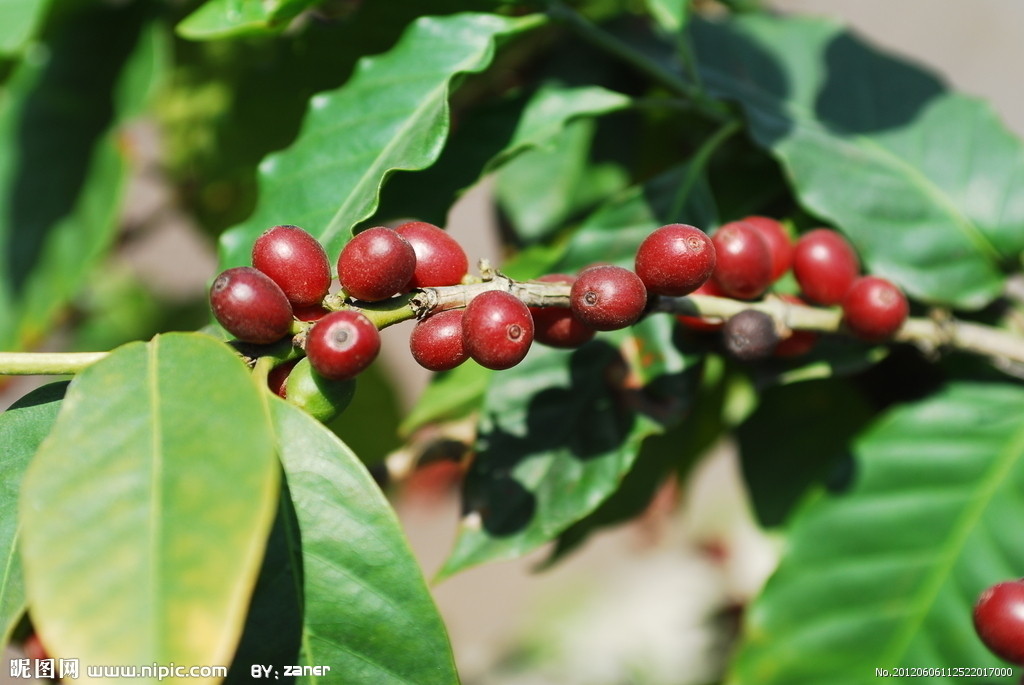
How long will it take for coffee to be planted before it can be harvested? The harvest from coffee tree planting to coffee beans is long.
Coffee trees take 3-5 years from planting to fruiting. 6-10 years of coffee trees are the most likely to bear fruit, about 15-20 years, is the harvest period. Coffee trees are usually bred in nurseries and grow into saplings, and then moved to coffee farms a year later, in full compliance with the way the Arabs planted and cultivated coffee trees. Coffee trees will continue to take root downward and upward in the first four or five years of their growth.

Panamanian Duncan Manor, the introduction of micro-batch high-quality beans, coffee powder after how delicious, the flavor is?
Professional coffee knowledge exchange more coffee bean information please follow the coffee workshop (Wechat official account cafe_style) Kotowa has a total of four coffee estates, namely Finca Kotowa Duncan Manor, Finca Kotowa Don K, Finca Kotowa RIO CRISTAL, Finca Kotowa tradicional, among which Duncan Manor is used
Introduction to the taste and flavor of coffee beans in Elida Manor, Panama
Panama has one of the highest volcanoes in Central America: Mount Baru. The Baru volcano has an altitude of more than 3474 meters, and the surrounding land is nutritious and balanced, providing sufficient conditions for the sowing and cultivation of Panamanian coffee. The cold air stream converges and flows above 2262 meters in the Central Mountains, resulting in a variety of small sizes in the Bouquete and Volcan regions.

Panama Finca Elida planting environment and flavor trend of Alida Manor in Panama?
Panama Finca Elida planting environment and flavor trend of Alida Manor in Panama? Finca Elida Manor of Panama is located in Boquette, a well-known boutique coffee producing area in Panama. the elevation of the manor is quite high. The average number of batches we purchase is between 1700 and 1800m. Alida Manor itself is in the National Park Reserve, which has been maintained all the time.

Coffee Manor-Erida Manor in Panama (Elida Estate Coffee)
Professional coffee knowledge exchange more coffee bean information Please pay attention to coffee workshop (Wechat official account cafe_style) Coffee producing areas are distributed in different parts of the world, mainly in several major producing areas, such as Central America, South America, Africa, Southeast Asia, Yunnan, China, etc., different manors in different producing areas, due to different altitude, soil, temperature, precipitation, etc., coffee aroma and taste are also different.